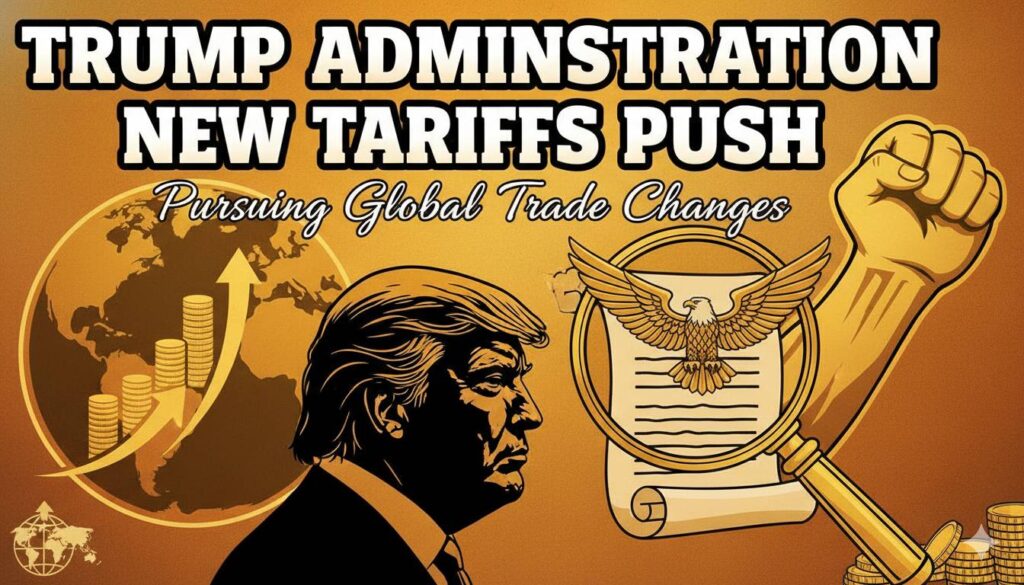

**” In a bold pivot following recent judicial setbacks, the Trump administration is aggressively exploring alternative legal pathways to maintain and expand protective tariffs, launching broad Section 301 investigations into unfair trade practices across dozens of countries while sustaining a temporary global import duty under Section 122. These moves aim to safeguard American industries, address persistent trade imbalances, and deliver on promises to reshore manufacturing and bolster national economic security. “**
Trump’s Renewed Push for Tariff Authority
The Trump administration has intensified efforts to impose and sustain tariffs on imports, adapting swiftly to constraints imposed by recent court decisions. After higher-profile mechanisms faced limitations, the focus has shifted to established trade statutes that provide the executive branch with significant flexibility to target perceived unfair practices and balance-of-payments issues.
Central to this strategy is the invocation of Section 122 of the Trade Act of 1974, which allows the president to impose temporary duties of up to 15% on imports to address large and serious balance-of-payments deficits. In late February 2026, a proclamation established a 10% ad valorem temporary import duty on a wide range of goods from all countries, effective February 24, 2026. This measure applies broadly but includes exemptions for critical items such as certain minerals, metals, energy products, pharmaceuticals, passenger vehicles, agricultural goods like beef and oranges, and informational materials. The duty is set to last 150 days, providing a window for further policy adjustments.
The administration has signaled intent to raise this rate to 15%, the maximum permitted under the statute. This temporary global tariff serves as an immediate tool to generate revenue, protect domestic producers, and pressure trading partners amid ongoing trade deficits. Estimates suggest it affects a substantial portion of annual imports, potentially applying to around $1.2 trillion in goods, though exemptions temper the full impact.
Complementing this, the Office of the United States Trade Representative (USTR) has initiated two major investigations under Section 301 of the Trade Act of 1974. These probes examine unfair trade practices, including discriminatory policies, subsidies, and other actions that harm U.S. commerce. One focuses on structural excess capacity in manufacturing across approximately 60 countries, targeting overproduction in sectors like steel, electronics, and chemicals that floods global markets and undercuts American industries. The other scrutinizes broader patterns of unfair practices in key economies.
These investigations cover major partners such as China, the European Union, Japan, South Korea, Mexico, India, Vietnam, Taiwan, and others in Southeast Asia and Europe. Findings could lead to targeted tariffs, quotas, or other remedies if violations are confirmed. The USTR aims to conclude these reviews expeditiously, potentially before the Section 122 duty expires, allowing seamless transition to more permanent measures if warranted.
This approach builds on earlier actions in the term, where tariffs addressed specific concerns like fentanyl flows, migration pressures, and reciprocal trade imbalances. Previous country-specific duties on Canada (up to 35% on most goods), Mexico (25% on most goods), and China (elevated rates with de minimis exemptions ended) demonstrated the administration’s willingness to use trade tools for non-trade objectives. Product-focused tariffs under Section 232 remain in place for items like steel, aluminum, copper derivatives, and autos, contributing to an elevated average applied tariff rate.
Economic and Sectoral Implications
The pursuit of these avenues reflects a commitment to using tariffs as leverage for reshoring production, raising wages, and reducing reliance on foreign supply chains. Domestic manufacturers in affected sectors stand to benefit from reduced competition, while importers face higher costs that may pass through to consumers or prompt supply chain shifts.
Key sectors under scrutiny include:
Advanced manufacturing and electronics
Chemicals and industrial materials
Metals and minerals
Automotive and transportation equipment
Exemptions in the current temporary duty aim to minimize disruptions in essential areas like energy, pharmaceuticals, and critical minerals.
Broader Trade Strategy
These developments underscore tariffs as a core element of the America First agenda. By combining temporary broad duties with targeted investigations, the administration seeks to maintain pressure on trading partners to negotiate fairer terms, open markets for U.S. exports, and curb practices deemed detrimental to American workers. The strategy also positions tariffs as a revenue source amid fiscal priorities, though long-term effects on inflation, growth, and global relations remain points of debate among economists.
Disclaimer: This is a news report based on current developments in U.S. trade policy. It is for informational purposes only and does not constitute financial, legal, or investment advice.