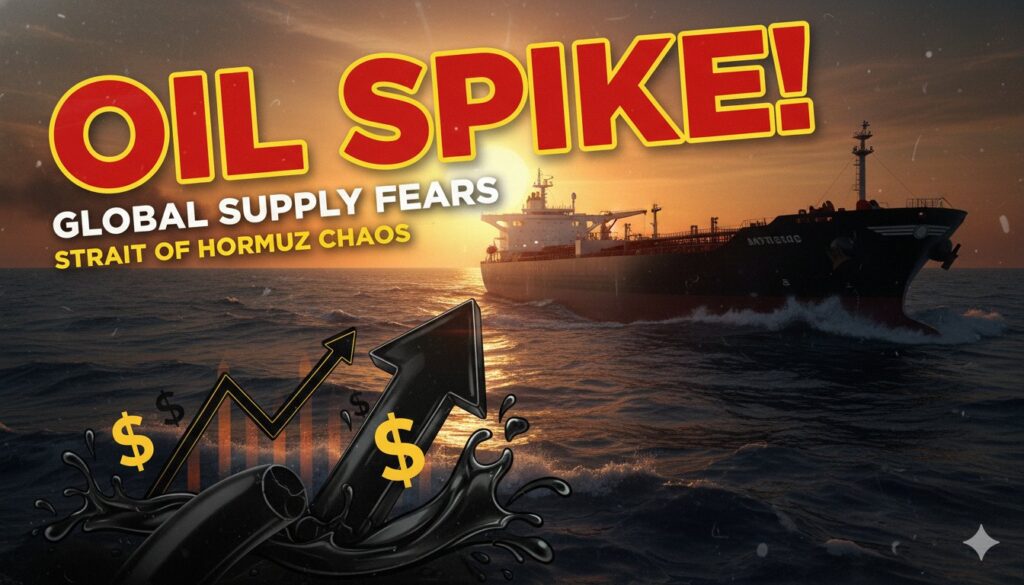

“Oil benchmarks have surged sharply amid escalating Middle East conflict, with tanker traffic through the critical Strait of Hormuz effectively halted following attacks on vessels and warnings from Iranian forces. Brent crude climbed over 8% to around $78-79 per barrel, while WTI rose similarly to the low $70s, reflecting immediate fears of supply shortages from the Persian Gulf, where roughly one-fifth of global oil transits. Disruptions include multiple tanker strikes, crew casualties, and hundreds of vessels anchoring outside the strait, raising risks of prolonged energy price volatility and potential impacts on U.S. gasoline costs.”
Oil Markets Reel from Hormuz Chokepoint Crisis
The global oil market experienced one of its most violent single-day moves in recent memory as geopolitical tensions in the Middle East boiled over into direct disruptions at the Strait of Hormuz. This narrow waterway, separating Iran from Oman, remains the world’s most vital oil artery, channeling approximately 20% of daily global crude consumption—around 15-20 million barrels—along with substantial volumes of liquefied natural gas from Qatar and other Gulf producers.
Recent events trace back to intensified military actions involving U.S. and Israeli strikes on Iranian targets, which prompted retaliatory responses including missile and drone attacks on regional infrastructure and vessels. Iranian forces issued explicit warnings prohibiting passage through the strait, effectively creating a self-imposed blockade as commercial shippers refused to risk transit. Ship-tracking data indicates a dramatic plunge in traffic, with declines of up to 70% in vessel movements through the chokepoint.
Multiple tankers have already been targeted in the vicinity. Reports detail at least three to four incidents in recent days, including a Marshall Islands-flagged crude carrier struck by a drone boat off Oman, resulting in an engine room explosion, fire, and the loss of one crew member. Other vessels suffered damage from projectiles or close-proximity explosions, leading to injuries, evacuations, and temporary fires. Over 150 oil and LNG tankers have dropped anchor in open waters beyond the strait entrance, with only limited passages by select Iranian or Chinese ships. Major shipping operators, including container giants, have suspended Gulf operations and begun rerouting around the Cape of Good Hope, adding significant time and cost to voyages.
These developments sent benchmark prices soaring. Brent crude, the international standard, jumped more than 8% in trading sessions, reaching levels around $78-79 per barrel after earlier intraday spikes approaching double digits. West Texas Intermediate (WTI), the U.S. benchmark, followed suit with gains exceeding 7-8%, trading in the low $70s. The surge reflects not just immediate supply concerns but also a rapid repricing of risk premiums, as traders factor in the potential for extended bottlenecks.
The Strait of Hormuz’s vulnerability stems from its geography: at its narrowest, the shipping lane is just a few miles wide, with traffic funneled through territorial waters where Iran exerts significant influence. While a full closure has never occurred historically, even partial or de facto interruptions—through attacks, insurance cancellations, or war-risk surcharges—can amplify volatility. Insurance providers have begun withdrawing coverage for Gulf voyages, further deterring operators.
For U.S. consumers and the broader economy, the implications are direct. Higher crude costs typically filter through to pump prices with a lag of several weeks, but sustained elevations could accelerate gasoline increases at a time when demand remains resilient. Refiners processing imported Gulf crudes may face higher input costs, while product markets like diesel have seen even steeper gains in some cases, up to 17-20% in futures.
Alternative routes offer limited relief. Existing pipelines from Saudi Arabia and the UAE can bypass the strait for a portion of exports—potentially 5-7 million barrels per day—but this falls short of total volumes, leaving millions of barrels at risk of being stranded. Qatar’s LNG exports, critical for global gas markets, face similar hurdles, contributing to sharp rises in European natural gas futures.
Market participants are closely monitoring escalation risks. Analysts note that prolonged disruptions could push prices toward $100 or higher, particularly if infrastructure damage spreads or if additional producers face threats. Some forecasts suggest Brent could test $80-90 in the near term under continued uncertainty.
The situation underscores the fragility of global energy logistics. With tanker backlogs growing and rerouting adding weeks to delivery times, supply chains for crude, refined products, and gas are under strain. Traders are hedging aggressively, with options activity reflecting bets on further upside volatility.
This episode highlights how quickly geopolitical flashpoints can override fundamentals in commodity markets. Demand outlooks, inventory levels, and production decisions from OPEC+ and non-OPEC players remain secondary when physical flows face existential threats at key chokepoints.
Key Oil Price Movements (Recent Trading):
Brent Crude: Up ~8-10% to approximately $78-79 per barrel
WTI Crude: Up ~7-8% to approximately $71-72 per barrel
Earlier intraday peaks saw Brent approach $82 in some reports
Related: Diesel/gasoil futures surged up to 20% in tandem
The path forward depends on de-escalation signals or military developments. Until stability returns to the strait, energy markets will remain on high alert, with every update capable of driving renewed price swings.
Disclaimer: This is a news report based on market observations and does not constitute financial advice, investment recommendations, or predictions of future events.