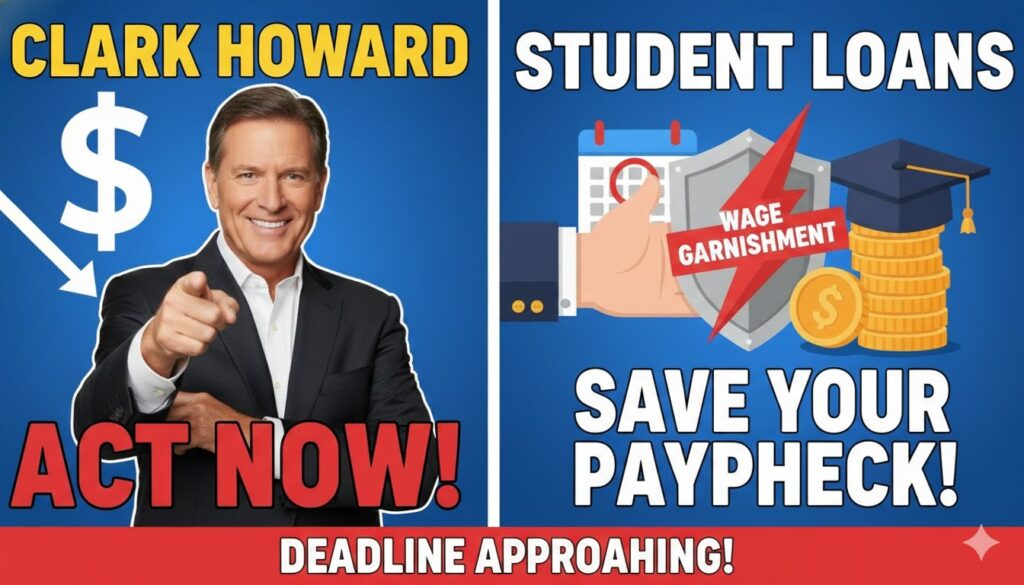

“Federal student loan borrowers facing default must seize this moment of relief to enroll in a suitable repayment plan or pursue rehabilitation, as the government could reinstate wage garnishment and other collections once new reforms take effect—protecting your paycheck starts with proactive steps today.”
Clark Howard Urges Action: Student Loan Borrowers Must Act Now to Prevent Future Wage Garnishment
The landscape for federal student loan repayment remains in flux as the Department of Education has postponed the resumption of involuntary collections, including Administrative Wage Garnishment (AWG) and Treasury Offset Program actions. This delay stems from ongoing efforts to implement significant reforms under recent legislation, aiming to simplify options and support borrowers in resuming regular payments.
Default occurs after roughly 270 days of non-payment on federal loans, triggering severe consequences once collections restart. Up to 15% of disposable pay can be garnished without a court order, tax refunds seized, and other benefits offset. Millions of borrowers are affected, with delinquency and default rates elevated following the end of pandemic-era forbearance.
Clark Howard emphasizes that the current hold on penalties is not permanent. Borrowers should not wait for enforcement to begin again. Instead, use this period to contact your loan servicer, review your status via the Federal Student Aid website, and explore pathways to exit default or avoid it entirely.
Key actions recommended include:
Enroll in an Income-Driven Repayment (IDR) Plan — These cap payments based on income and family size, often as low as $0 for low earners, with potential forgiveness after a set period. Current options like Income-Based Repayment (IBR), Pay As You Earn (PAYE), and Income-Contingent Repayment (ICR) remain available for existing borrowers, though changes loom.
Pursue Loan Rehabilitation — This involves making nine on-time, reasonable, and affordable payments (typically over 10 months) to remove default status from credit reports and halt collections. Rehabilitation restores good standing and eligibility for benefits like deferment.
Consider Consolidation — Combining loans can qualify them for new or different plans, including IDR options, and may reset the clock toward forgiveness.
Monitor Upcoming Changes — Starting July 1, 2026, new federal loans will have limited choices: a tiered Standard Repayment Plan (10-25 years based on balance) or the new Repayment Assistance Plan (RAP). RAP sets payments at 1-10% of adjusted gross income (with a $10 minimum floor for very low earners), offers interest subsidies, dependent deductions, and monthly government contributions to principal. Forgiveness arrives after 30 years. Existing borrowers retain access to prior IDR plans until phased out (e.g., PAYE and ICR by July 1, 2028), but consolidation or new borrowing could shift eligibility.
Current Federal Student Loan Repayment Landscape (as of March 2026)
| Aspect | Details | Implications for Borrowers |
|---|---|---|
| Involuntary Collections | Delayed (no AWG or TOP enforcement currently) | Temporary relief; act before resumption |
| Default Threshold | 270+ days missed payments | Triggers potential garnishment once resumed |
| Wage Garnishment Limit | Up to 15% of disposable pay | Significant hit to take-home pay |
| Rehabilitation | 9 on-time affordable payments | Removes default, restores benefits |
| Current IDR Plans | IBR, PAYE, ICR (for pre-2026 loans) | Lower payments, forgiveness after 20-25 years |
| New RAP (from July 2026) | 1-10% of AGI, subsidies, 30-year forgiveness | Simpler, but longer timeline for relief |
| Standard Plan Options | Fixed terms (10-25 years tiered by balance post-2026) | Predictable but higher payments for large balances |
Borrowers in default should prioritize contacting their servicer promptly—many offer flexible rehabilitation terms during this pause. Those current on payments but struggling should switch to an IDR plan to prevent delinquency. Howard stresses avoiding scams promising quick forgiveness; legitimate help comes directly from the Department of Education or approved servicers.
For those with private student loans, note that garnishment requires a court judgment—federal rules do not apply.
This breathing room from the delay reflects a commitment to better support repayment amid reforms. However, the message is clear: inaction risks severe financial disruption when collections potentially restart. Proactive engagement now safeguards wages and long-term stability.
Disclaimer: This article is for informational purposes only and does not constitute financial, legal, or tax advice. Consult a qualified professional or your loan servicer for personalized guidance.

