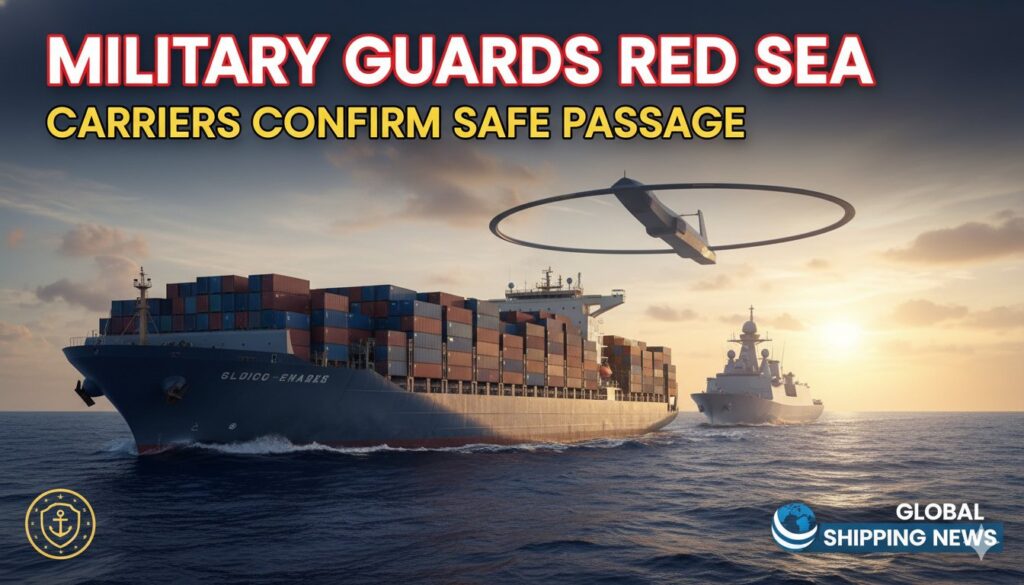

“Shipping powerhouses are cautiously resuming Red Sea transits under military protection, aiming to cut voyage times and costs, but persistent regional threats could still disrupt global trade flows and elevate freight rates for U.S. importers.”
Red Sea Revival: Carriers Turn to Military for Secure Passage
Major container shipping alliances have signaled a pivotal shift in their routing strategies, opting to reinstate select services through the Red Sea with direct military escorts. This move comes as a response to prolonged diversions around Africa’s Cape of Good Hope, which have inflated operational expenses and delayed cargo deliveries. Leading carriers emphasize that naval involvement is essential to mitigate risks from sporadic threats in the region, allowing for more efficient Asia-Europe and Asia-U.S. East Coast connections. For American businesses reliant on timely imports from Asia, this could mean shorter lead times for everything from electronics to apparel, potentially stabilizing supply chains that have been strained for over two years.
The decision reflects a calculated bet on enhanced security measures. Alliances involving key players have outlined plans for escorted convoys on high-value routes, where vessels will transit under the watchful eye of multinational naval forces. This approach not only reduces fuel consumption by thousands of miles per voyage but also lowers emissions, aligning with growing regulatory pressures on the industry to adopt greener practices. However, carriers acknowledge that full-scale returns remain contingent on sustained stability, with contingency plans in place for immediate rerouting if conditions deteriorate.
Carrier Strategies and Operational Adjustments
Prominent carriers have detailed their phased re-entry into the Red Sea corridor. One major alliance has confirmed that shared services will resume transits through the Suez Canal, with all voyages secured by naval assets. This includes deploying advanced tracking and communication systems to coordinate with military units in real-time. The focus is on premium services carrying time-sensitive goods, where the benefits of shorter routes outweigh the added security premiums.
Operationally, this entails adjustments to vessel speeds and formations. Ships will travel in protected groups, potentially slowing individual transit times slightly but ensuring collective safety. Carriers are also investing in upgraded insurance policies tailored to escorted voyages, which could add 5-10% to overall costs but are deemed preferable to the 30-40% surcharges from Cape diversions. For U.S. audiences, this translates to more predictable arrival schedules at East Coast ports like New York and Savannah, where backlogs from rerouted ships have occasionally spiked handling fees.
In terms of fleet utilization, carriers are reallocating tonnage to capitalize on these secured paths. Larger mega-vessels, capable of carrying over 20,000 twenty-foot equivalent units (TEUs), are being prioritized for escorted runs to maximize efficiency. Smaller feeders will handle regional distributions, minimizing exposure to unsecured areas. This strategic pivot is expected to boost capacity on transatlantic trades by up to 15%, providing relief to U.S. exporters of agricultural products and chemicals who have faced competitive disadvantages from higher outbound rates.
Military Role in Safeguarding Commerce
Multinational military coalitions are stepping up as the backbone of this resurgence. Forces from the U.S., UK, and EU nations are leading operations to patrol the southern Red Sea and Bab el-Mandeb Strait, deploying destroyers, frigates, and aerial surveillance to deter potential disruptions. These efforts include proactive measures like intercepting unmanned threats and providing on-call support for commercial fleets.
The U.S. Navy, in particular, has bolstered its presence with carrier strike groups positioned in adjacent waters, ready to respond to any escalations. This military commitment underscores the strategic importance of the Red Sea, which handles about 12% of global seaborne trade. For the U.S. economy, secure passages mean safeguarded oil imports from the Middle East, helping to stabilize domestic energy markets amid fluctuating global supplies.
Coordination between carriers and military commands is facilitated through joint maritime centers, where real-time intelligence sharing ensures voyages are timed to avoid high-risk periods. This collaboration has already enabled several test transits without incident, building confidence among shippers. However, the financial burden falls partly on taxpayers, as defense budgets allocate resources to protect economic interests far from home shores.
Economic Ramifications for the U.S. Market
The partial resumption of Red Sea voyages carries significant implications for the U.S. economy, particularly in trade-dependent sectors. Prolonged Cape diversions have contributed to elevated inflation pressures, with shipping costs filtering through to consumer prices. By shortening routes, escorted transits could shave 10-14 days off Asia-to-U.S. East Coast journeys, reducing inventory holding costs for retailers and manufacturers.
Yet, the transition isn’t without hurdles. U.S. importers face potential rate volatility as carriers balance security premiums against savings from shorter distances. Current spot rates from Shanghai to New York hover around $3,000 per 40-foot container, down from peaks but still elevated compared to pre-crisis levels. If threats persist, these could climb, impacting sectors like automotive and consumer goods, where thin margins amplify cost increases.
On the energy front, secure Red Sea lanes support steady crude flows, with WTI prices stabilizing around $62 per barrel. This helps contain gasoline costs for American drivers, averting spikes that could erode disposable income. Broader economic forecasts suggest that a successful revival could trim 0.2-0.3 percentage points off U.S. core inflation in the coming quarters, aiding the Federal Reserve’s efforts to maintain growth without overheating.
| Key Freight Rate Benchmarks (as of early February 2026) |
|---|
| Route |
| Shanghai to Rotterdam |
| Shanghai to Genoa |
| Shanghai to New York |
| Shanghai to Los Angeles |
This table illustrates the current pricing landscape, showing a mix of declines on some routes due to increased capacity and lingering premiums on others affected by regional uncertainties.
Stock Market Responses and Investor Sentiment
Shipping stocks have reacted positively to announcements of secured voyages, reflecting optimism about normalized operations. Shares of leading carriers have seen gains, with one major player’s stock climbing to around 15,875 in local currency, up from recent lows. Another key operator trades at approximately 121 in its market, buoyed by analyst upgrades citing improved earnings potential from route efficiencies.
U.S. investors are monitoring these developments closely, as they influence broader indices tied to logistics and trade. Exchange-traded funds focused on transportation have edged higher, anticipating reduced operational risks. However, volatility remains, with hedge funds positioning for scenarios where military escorts prove insufficient, potentially triggering sell-offs.
Analysts project that full Red Sea utilization could add 5-8% to annual profits for affected firms, driven by lower bunker fuel expenses and higher throughput. For U.S.-listed shipping entities, this could translate to enhanced dividend payouts, appealing to income-focused portfolios amid uncertain bond yields.
Challenges and Risk Factors
Despite the progress, challenges abound. Regional geopolitical tensions could flare, prompting carriers to revert to longer routes and eroding gains. Insurance underwriters are demanding detailed risk assessments for escorted voyages, which might exclude certain high-profile vessels.
Supply chain managers in the U.S. are advised to diversify sourcing, blending Red Sea options with Pacific routes to hedge against disruptions. Labor unions at East Coast ports are preparing for potential volume surges, negotiating for additional staffing to handle accelerated unloadings.
Environmental considerations add another layer, as shorter routes cut carbon footprints but military operations increase overall emissions from naval assets. Carriers are exploring hybrid propulsion technologies to offset this, aligning with U.S. corporate sustainability goals.
Future Prospects and Strategic Recommendations
Looking ahead, the success of military-secured voyages could pave the way for broader industry adoption. If the next few months pass without major incidents, more alliances may follow suit, potentially restoring 70-80% of pre-diversion traffic through the Suez.
For U.S. businesses, strategic stockpiling remains prudent, especially for seasonal goods ahead of peak periods. Policymakers might consider incentives for resilient supply chains, such as tax credits for diversified routing.
In summary, while military escorts offer a lifeline to strained trade arteries, the path forward demands vigilance. The interplay of security, economics, and geopolitics will shape outcomes, with profound effects on U.S. commerce.
Disclaimer: This article is for informational purposes only and does not constitute financial advice, investment recommendations, or endorsements. All information is based on publicly available data and general market analysis. Readers should conduct their own research and consult professionals before making decisions.