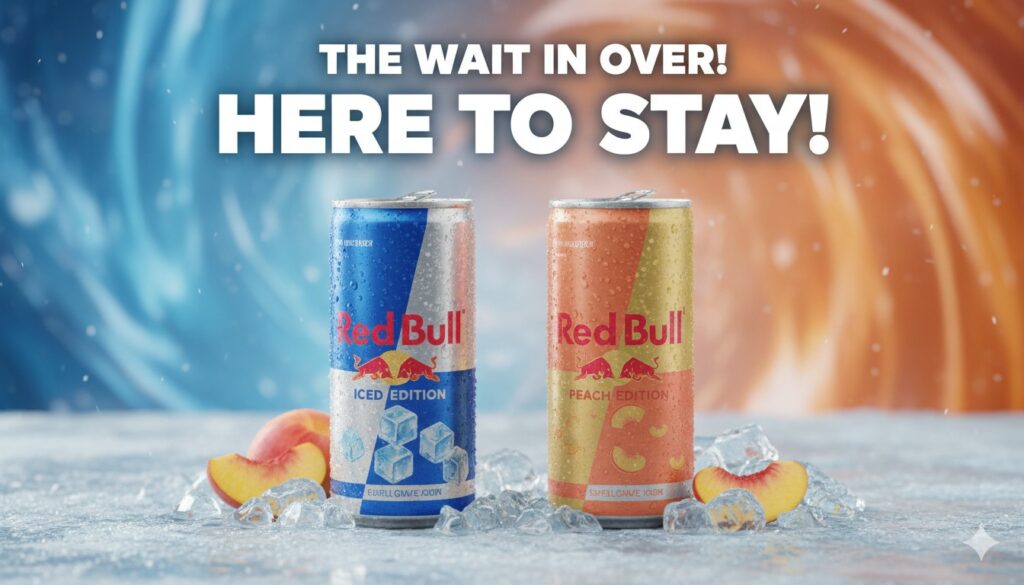

“Red Bull has made its Iced Vanilla Berry and White Peach flavors permanent additions to its lineup, responding to high consumer demand and aiming to solidify its market leadership in the $26.7 billion U.S. energy drinks sector. This decision, effective nationwide from mid-January 2026, includes regular and zero-sugar options, potentially driving incremental sales growth amid a projected 7.2% CAGR through 2030, while phasing out underperforming variants to optimize portfolio efficiency.”
Market Impact and Strategic Rationale
Red Bull’s decision to integrate the Iced Vanilla Berry and White Peach flavors into its core portfolio reflects a calculated response to consumer preferences in the competitive U.S. energy drinks landscape. These flavors, previously limited to seasonal releases, generated significant buzz and rapid sell-outs, prompting the company to capitalize on sustained demand. By making them available year-round in 12-ounce cans with the standard energy formula, Red Bull aims to capture additional market share from impulse buyers and loyalists seeking variety without compromising on the brand’s signature boost.
This move aligns with broader industry trends where flavor innovation drives volume growth. In 2025, Red Bull commanded approximately 37% of the U.S. market, outpacing rivals like Monster at 27% and emerging players such as Celsius at 17%. The permanence of these editions could add meaningful revenue streams, especially as the overall sector expands from $26.7 billion in 2025 toward $37.8 billion by 2030, fueled by rising consumption among millennials and Gen Z for performance enhancement in work, fitness, and daily routines.
Sales and Revenue Projections
Analysts anticipate this portfolio adjustment will contribute to Red Bull’s global revenue trajectory, building on the company’s 2024 performance of €11.2 billion in net sales—a 6.4% increase year-over-year—and 12.7 billion cans sold worldwide. In the U.S., where energy drinks represent a key growth driver, the new permanent flavors are expected to bolster per-unit sales, particularly in convenience stores and supermarkets, which account for over 60% of category distribution.
To accommodate these additions, Red Bull is discontinuing select variants, including Blue Edition, Green Edition, and sugar-free Red and Amber options. This streamlining reduces production complexity and inventory costs, allowing for reallocation of resources toward high-margin innovations. Early indicators suggest the Iced Edition (Vanilla Berry) and Peach Edition (White Peach) could lift U.S. segment sales by 3-5% in the coming fiscal year, leveraging zero-sugar variants to appeal to health-conscious consumers amid growing scrutiny on added sugars.
Consumer Trends Driving Adoption
| Competitor | U.S. Market Share (2025) | Key Strengths |
|---|---|---|
| Red Bull | 37% | Brand loyalty, global scale, flavor variety |
| Monster | 27% | Affordable pricing, broad distribution partnerships |
| Celsius | 17% | Natural ingredients, fitness-oriented positioning |
| Others | 19% | Niche functional claims, emerging brands |
The U.S. energy drinks market benefits from shifting demographics, with young adults aged 18-34 representing over 50% of consumption. Demand for functional beverages that enhance focus and stamina has surged, particularly post-pandemic, as hybrid work models and active lifestyles persist. Red Bull’s new permanent offerings tap into this by providing light, fruity profiles—Iced Vanilla Berry with creamy berry notes and White Peach with subtle fruitiness—while maintaining 110mg of caffeine per can.
Zero-sugar versions address a rising preference for low-calorie options, which grew to 35% of category sales in 2025. This positions Red Bull to compete against “clean” energy upstarts without eroding its premium pricing, where average retail prices hover at $2.50-$3.00 per can, supporting healthy margins.
Supply Chain and Operational Efficiency
Red Bull’s vertically integrated model, from ingredient sourcing to distribution, provides a buffer against inflationary pressures on aluminum and taurine. The flavor permanence is timed with the rollout of new variety packs, enhancing shelf visibility and cross-selling opportunities. As the company employs nearly 20,000 globally, this initiative could indirectly support job stability in U.S. operations through increased production volumes.
With a new Spring Edition (Cherry Sakura) slated for March 2026, Red Bull continues to innovate seasonally while fortifying its evergreen lineup, ensuring resilience in a market where economic uncertainties could temper discretionary spending.
Disclaimer: This news report provides general information and tips based on publicly available sources; it is not personalized financial advice.