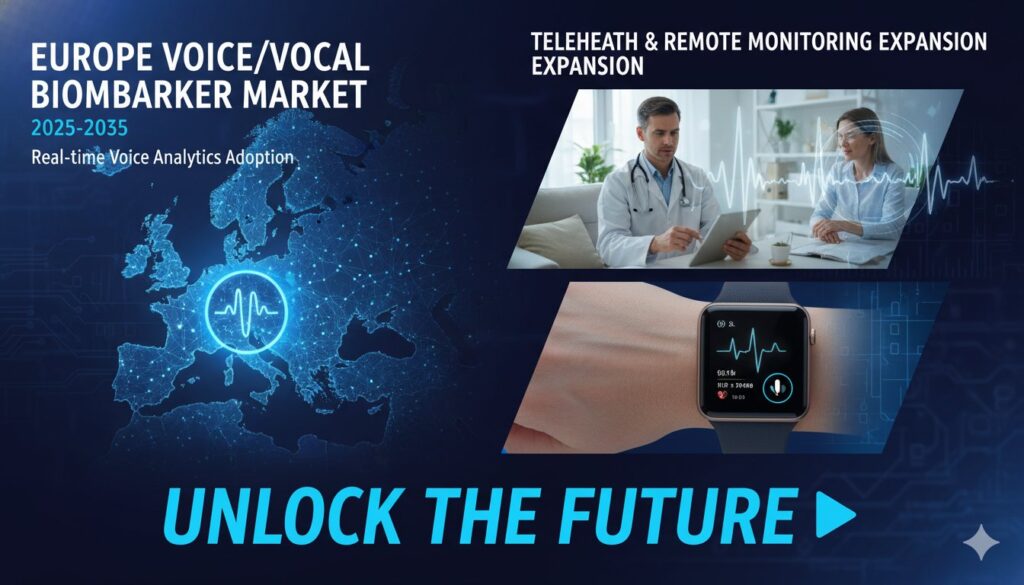

“The European voice biomarker sector is set for robust expansion, fueled by surging telehealth demands and remote health tracking innovations. Projections indicate the market climbing from around $386 million to $1.7 billion over the decade, with a steady 16% annual growth rate, as real-time voice analysis integrates deeply into diagnostics and patient monitoring.”
Market Overview The landscape of voice biomarkers in Europe is transforming healthcare delivery through advanced audio analysis techniques that detect subtle vocal changes indicative of various health conditions. This technology leverages artificial intelligence to process speech patterns, offering non-invasive insights into neurological, mental health, respiratory, and cardiovascular issues. With an emphasis on scalability, these solutions are increasingly embedded in everyday devices, enabling seamless data collection and analysis.
Growth Drivers Several factors are propelling this market forward. The escalating incidence of chronic conditions like Parkinson’s disease, depression, and Alzheimer’s necessitates efficient, cost-effective monitoring tools. Regulatory environments in the region are adapting to embrace digital health advancements, facilitating quicker approvals for AI-driven medical applications. Additionally, the proliferation of smartphones and wearables provides a vast ecosystem for capturing voice data, supporting personalized treatment approaches that prioritize patient convenience.
The push toward value-based care models further accelerates adoption, as voice biomarkers reduce the need for in-person visits while maintaining high diagnostic accuracy. Investments in research and development are surging, with collaborations between tech firms and healthcare providers aiming to refine algorithms for broader applicability.
Key Trends A pivotal trend is the integration of voice analytics into telehealth platforms, allowing for real-time assessment during virtual consultations. This enables clinicians to monitor patient progress remotely, detecting early signs of deterioration through vocal cues such as pitch variations or speech rhythm anomalies. Remote monitoring systems are evolving to incorporate these biomarkers, offering continuous oversight for at-risk populations without disrupting daily routines.
Another emerging pattern is the use of machine learning to enhance predictive capabilities, where voice data combines with other biometrics for comprehensive health profiles. Partnerships are forming across the industry, linking software developers with pharmaceutical entities to trial voice-based endpoints in drug studies. Mobile applications are also gaining traction, empowering users to self-track vocal health metrics and receive timely alerts.
Market Segmentation The market breaks down into distinct categories, each contributing to overall growth:
| Segment | Subcategories | Key Insights |
|---|---|---|
| Platform Type | Cloud-based, Web-based | Cloud solutions dominate due to their scalability and ease of integration with telehealth infrastructures. |
| Application | Diagnostics, Monitoring, Clinical Research, Others | Monitoring applications lead, driven by remote patient management needs in chronic care. |
| Indication | Neurological Disorder, Mental Health Disorder, Respiratory Diseases, Cardiovascular Disease, Others | Mental health indications show the fastest growth, reflecting rising awareness and telehealth utilization. |
| End User | Hospitals, CROs, Research Institutions | Hospitals represent the largest share, leveraging voice tech for efficient triage in remote settings. |
| Country | U.K., Germany, France, Italy, Spain, Rest-of-Europe | Germany and the U.K. spearhead adoption, supported by strong digital health ecosystems and funding. |
Key Players and Competitive Landscape Prominent companies are shaping the sector through innovation and strategic alliances. Firms like auddering GmbH specialize in emotion detection via voice, enhancing mental health applications. EVOCAL Health GmbH focuses on respiratory monitoring, integrating biomarkers into telehealth for asthma and COPD management. VoiceMed Italia Srl offers multilingual solutions tailored to Europe’s diverse populations, while Zana Technologies GmbH emphasizes AI-powered diagnostics for neurological conditions.
Competition is intensifying as these players expand their portfolios, often through acquisitions or joint ventures, to capture larger market shares in remote monitoring niches.
Investment Opportunities For investors eyeing health-tech, this market presents high-potential avenues. Venture funding is flowing into startups developing proprietary algorithms, with returns amplified by the sector’s alignment with broader digital transformation goals. Established players are attractive for their proven scalability, particularly in telehealth integrations that promise recurring revenue streams from subscription-based analytics services.
Disclaimer: This article is for informational purposes only and does not constitute investment advice or recommendations. The news, reports, and tips presented are derived from various industry analyses and public data sources.