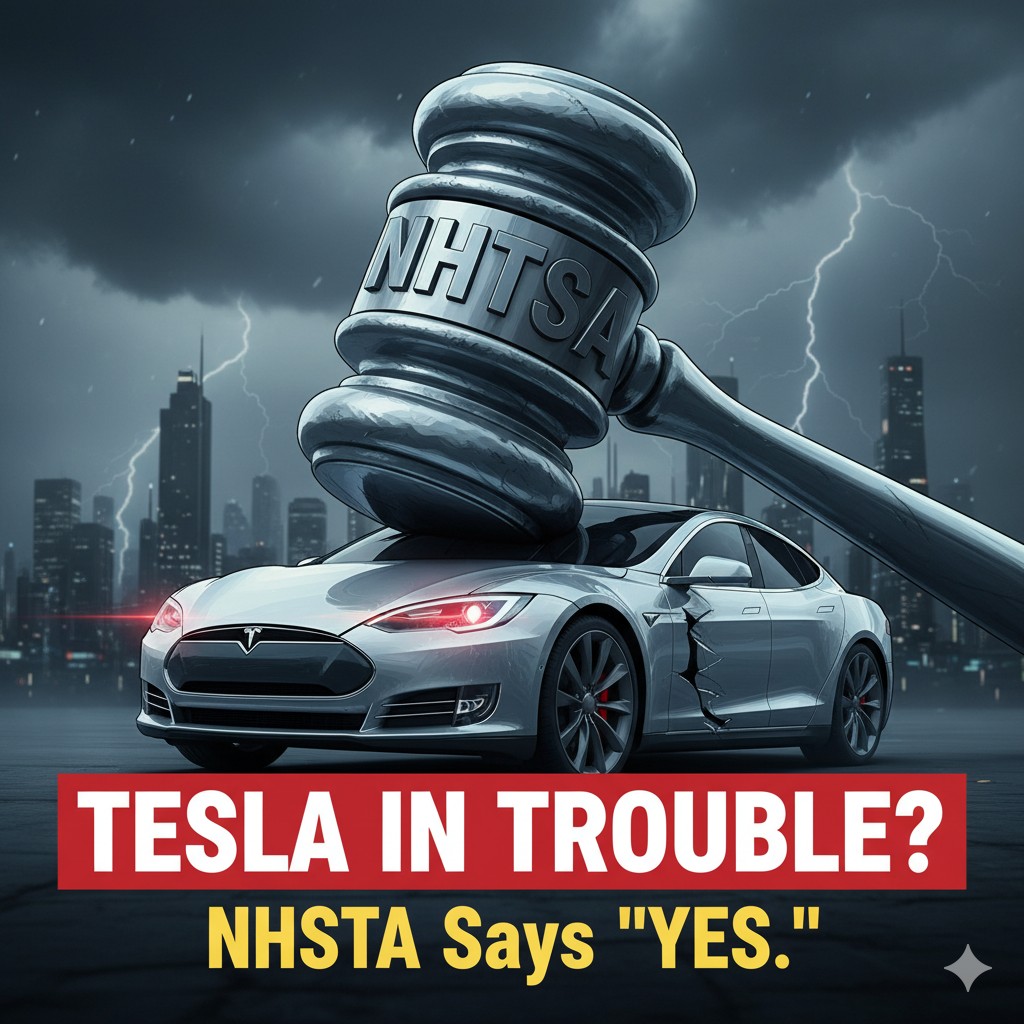

The NHTSA has escalated its investigation into Tesla’s Full Self-Driving system to an engineering analysis phase, covering approximately 3.2 million vehicles. This upgrade follows reports of nine crashes linked to the system’s failure to detect or adequately warn drivers in reduced-visibility conditions, including one fatality and two injuries. The probe, now at the stage typically preceding a potential recall, highlights ongoing concerns with Tesla’s camera-only approach and could pressure the company’s valuation and regulatory standing.
NHTSA Escalates Probe into Tesla’s Full Self-Driving Capabilities
The latest development centers on the upgrade of an ongoing investigation into Tesla’s Full Self-Driving (Supervised) software. Initially launched as a preliminary evaluation in October 2024 covering around 2.4 million vehicles, the probe has now advanced to a formal engineering analysis under designation EA26002. This step involves deeper technical review and data collection, often serving as the final investigative phase before regulators can mandate corrective actions, including widespread recalls.
At issue is the system’s “degradation detection” mechanism—the software responsible for identifying when camera performance is compromised due to environmental factors and alerting the driver to take manual control. Regulators have expressed concerns that this system fails to perform reliably in common real-world scenarios that impair visibility, such as sun glare, fog, dust, heavy rain, or other airborne obscurants. In the incidents reviewed, the software reportedly did not detect these conditions promptly, nor did it issue timely warnings, leading to crashes where the vehicle failed to respond appropriately to road hazards or preceding vehicles.
The scope has expanded significantly, now encompassing an estimated 3,203,754 vehicles equipped with FSD capabilities. This includes:
Model S (2016–2026)
Model X (2016–2026)
Model 3 (2017–2026)
Model Y (2020–2026)
Cybertruck (2023–2026)
The escalation stems from additional crash reports beyond the initial four identified in 2024. The agency now cites nine confirmed or suspected incidents tied to the visibility issue, with outcomes including one fatal pedestrian collision and two crashes resulting in injuries. Six other potential cases remain under review for linkage. These events underscore a pattern where the camera-reliant system struggles in routine degraded conditions, raising questions about whether Tesla’s vision-only philosophy—eschewing radar and lidar in favor of cameras and neural networks—meets federal safety standards for advanced driver-assistance systems.
This is not an isolated regulatory action against Tesla. The company faces concurrent scrutiny, including a separate NHTSA investigation opened in late 2025 into roughly 2.88 million FSD-equipped vehicles over more than 50 reports of traffic safety violations, improper lane changes, and other crashes. Past actions have included multiple Autopilot-related probes, some culminating in over-the-air software updates or recalls affecting millions of vehicles.
Beyond FSD-specific issues, Tesla has dealt with other NHTSA-mandated actions. For instance, in early 2025, the company addressed a recall involving certain Cybertruck models where exterior cosmetic panels (cant rails) risked delamination and detachment, potentially creating road hazards. While unrelated to autonomy, such incidents contribute to a broader narrative of quality and safety oversight challenges.
The implications for Tesla extend far beyond immediate compliance. A potential recall of FSD functionality across millions of vehicles could disrupt operations, require extensive software revisions, and incur substantial costs. More critically, it threatens the core of Tesla’s valuation narrative: leadership in autonomous driving and the path to robotaxi services. With plans for Cybercab deployment and unsupervised autonomy hinging on regulatory approval, prolonged or adverse NHTSA findings could delay timelines, erode investor confidence, and invite further legal challenges from affected owners or crash victims.
Market reaction has already reflected these pressures. Tesla shares experienced notable declines in the sessions following the escalation announcement, with intraday drops of around 3% attributed directly to the news amid broader concerns over regulatory headwinds. Investors remain sensitive to any signal that could hinder the company’s ambitious autonomy roadmap, especially as competitors advance with multi-sensor approaches perceived as more robust in adverse conditions.
The engineering analysis phase will involve detailed examination of crash data, system logs, software versions, and Tesla’s responses to known issues. Outcomes could range from mandated software fixes delivered over-the-air to more severe requirements, such as temporary disabling of FSD in certain conditions or a full recall of the feature until proven safe. Tesla has yet to issue a formal public response to the latest upgrade, though the company has historically emphasized that its systems require active driver supervision and that data shows continuous improvements through fleet learning.
For U.S. consumers and shareholders alike, this heightened regulatory focus serves as a reminder that autonomous technology, no matter how advanced, must satisfy rigorous federal safety thresholds. Tesla’s unique approach continues to draw both innovation praise and intense oversight, but the current trajectory suggests meaningful risks ahead if visibility-related deficiencies persist.
Disclaimer: This is for informational purposes only and does not constitute investment, legal, or safety advice. Always consult official sources and professionals for decisions related to vehicles, regulations, or finances.