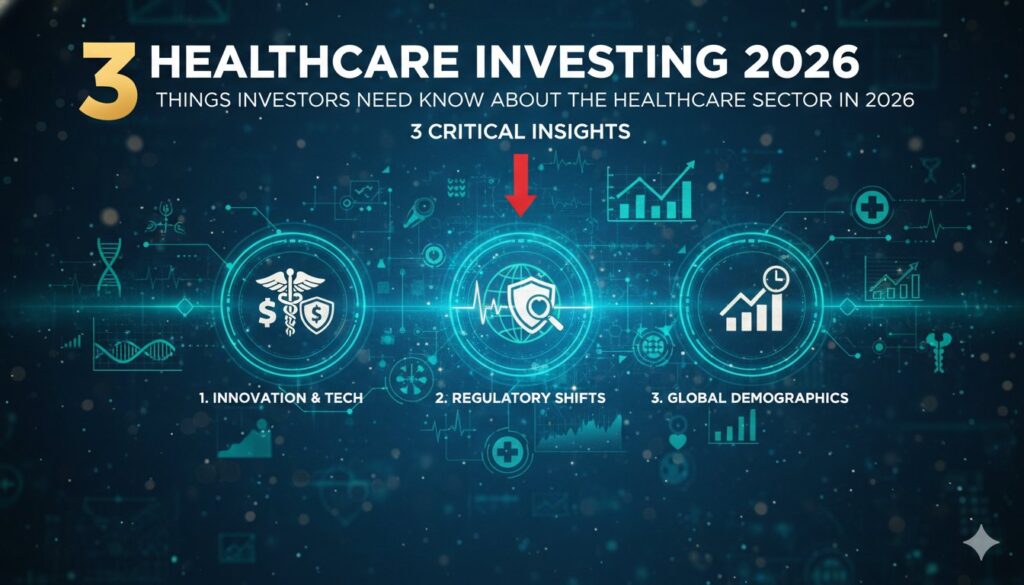

“In 2026, the U.S. healthcare sector faces transformative shifts driven by AI integration accelerating drug discovery and operational efficiencies, surging M&A activity in biotech and medtech amid stabilizing economic conditions, and evolving regulatory pressures on drug pricing and reimbursement models that could reshape profitability across providers and payers.”
The healthcare landscape in 2026 is marked by rapid innovation and persistent challenges, offering a mix of growth potential and risks for portfolios. With national health expenditures projected to climb at an annual rate of around 5-7 percent through the end of the decade, driven by an aging population and chronic disease prevalence, the sector’s overall EBITDA is expected to expand at a compounded annual growth rate of approximately 5 percent in the near term, potentially accelerating to 10 percent by 2029. This growth trajectory underscores opportunities in high-margin areas like health services technology and specialty pharmaceuticals, even as margins hover around 9 percent of expenditures, reflecting ongoing cost pressures from inflation and workforce shortages.
1. AI’s Expanding Role in Driving Efficiency and Innovation
Artificial intelligence stands out as a pivotal force reshaping healthcare operations and investment strategies. In drug development, AI tools are slashing timelines and costs, with algorithms now capable of predicting molecular interactions and optimizing clinical trial designs. This has led to a surge in venture capital flowing into AI-enabled platforms, where investments reached nearly $18 billion in the U.S. and Europe last year alone, representing close to half of all healthcare VC deals. For investors, this translates to heightened interest in companies leveraging AI for administrative automation, such as reducing provider burnout through streamlined documentation and predictive analytics for patient outcomes.
In clinical settings, AI is enhancing diagnostic accuracy, particularly in imaging and remote monitoring. Wearable devices integrated with machine learning are enabling real-time cardiac arrhythmia detection, shifting care from hospitals to ambulatory settings and potentially cutting costs by up to 20 percent in high-volume procedures. This migration supports a broader trend toward value-based care, where payers reward outcomes over volume, boosting margins for tech-savvy providers.
Key investment considerations include the maturation of AI governance, with frameworks emerging to address data privacy and bias. Portfolio managers should watch for companies in health information technology that prioritize interoperability, as these could capture market share in a sector where digital transformation is critical for navigating margin squeezes. A table below highlights projected AI impact on select subsectors:
| Subsector | AI Application | Projected 2026 Revenue Growth | Key Risk |
|---|---|---|---|
| Biopharma | Drug Discovery Acceleration | 15-20% CAGR | Regulatory Scrutiny on AI-Generated Data |
| Medtech | Predictive Diagnostics | 12-15% CAGR | High R&D Costs |
| Health Services | Administrative Automation | 10-12% CAGR | Integration Challenges with Legacy Systems |
This AI-driven efficiency is particularly appealing in a year where labor shortages persist, with projections indicating a deficit of over 96,000 full-time equivalent physicians, amplifying the need for tech solutions to bridge gaps in care delivery.
2. Ramp-Up in M&A and Consolidation Amid Economic Recovery
Merger and acquisition activity is poised for a rebound in 2026, fueled by lower interest rates, abundant private equity dry powder exceeding $200 billion in healthcare-focused funds, and a backlog of delayed deals from prior years. Biotech and pharma sectors are leading the charge, with deal values already surpassing $32 billion in medtech alone through recent quarters. Investors should anticipate strategic acquisitions targeting high-growth areas like pulsed field ablation and neuromodulation, where companies are divesting non-core assets to focus on therapeutic niches with margins often exceeding 25 percent.
Consolidation in healthcare services, including behavioral health and fertility practices, is driven by the push for scale and regional density. This is evident in the rise of scalable platforms that integrate technology for better compliance and efficiency, positioning them well against reimbursement risks. Private equity firms are increasingly favoring deals that emphasize recurring cash flows and resilient innovation, such as assets in ambulatory and post-acute care, which are expected to drive volume growth amid cost containment pressures.
For stock pickers, this environment favors diversified players with strong balance sheets capable of opportunistic buys. However, valuation dislocations from past cycles remain a hurdle, with mid-market deals potentially constrained by policy uncertainties. A comparative table of recent M&A trends illustrates the momentum:
| Sector | 2025 Deal Volume (Billions) | Expected 2026 Increase | Notable Drivers |
|---|---|---|---|
| Biotech/Pharma | $45 | 20-30% | AI-Enhanced Pipelines |
| Medtech | $32 | 15-25% | Portfolio Realignments |
| Healthcare Services | $28 | 10-20% | Shift to Lower-Cost Settings |
This consolidation wave could lead to re-ratings in undervalued segments, but investors must monitor antitrust scrutiny, especially in concentrated markets like pharmacy benefit management, where transparency mandates are forcing business model adaptations.
3. Navigating Regulatory and Policy Uncertainties
The regulatory environment in 2026 introduces both headwinds and tailwinds, with policy shifts around drug pricing, reimbursement, and coverage expansions creating volatility. The Inflation Reduction Act’s ongoing implementation is capping out-of-pocket costs for Medicare beneficiaries, pressuring pharma margins on high-volume drugs but opening doors for innovative therapies in oncology and rare diseases. Payers are optimizing products amid higher CMS rate adjustments, with pharmacy spend now accounting for 32 percent of total medical costs, prompting integrated strategies to contain trends.
Healthcare premiums are rising at an unprecedented 6-9 percent for employers, the largest jump in over a decade, exacerbating affordability concerns. This is compounded by demographic shifts, including an aging population projected to increase chronic care demands by 15 percent. Investors should focus on segments resilient to these pressures, such as specialty pharmacies and value-based care models, where capitated payments have doubled since 2021, offering stable revenue streams.
Policy flashpoints include potential upheavals in Medicaid and Medicare coverage, influenced by political dynamics, and new rules on pharmacy benefit managers that delink compensation from drug prices, fostering transparent models. For global exposure, emerging innovation from regions like China is rebalancing the landscape, challenging U.S. dominance in research.
To aid decision-making, consider this breakdown of regulatory impacts on key metrics:
| Policy Area | Impact on Providers | Impact on Payers | Investor Implication |
|---|---|---|---|
| Drug Pricing Reforms | Lower Reimbursements for Legacy Drugs | Cost Savings on Biosimilars | Favor Novel Therapies |
| PBM Transparency | Increased Competition | Rebate Pass-Through Requirements | Boost to Transparent Platforms |
| Coverage Expansions | Higher Volume in Ambulatory Care | Product Optimization Initiatives | Growth in HSA-Compatible Plans |
These dynamics highlight the need for agile portfolios, prioritizing companies with robust compliance frameworks and diversified revenue sources to mitigate downside risks while capitalizing on growth in preventive and personalized medicine.
Disclaimer: This news, report, and tips are for informational purposes only and do not constitute financial advice. Consult a professional advisor before making investment decisions. Sources are based on publicly available information.